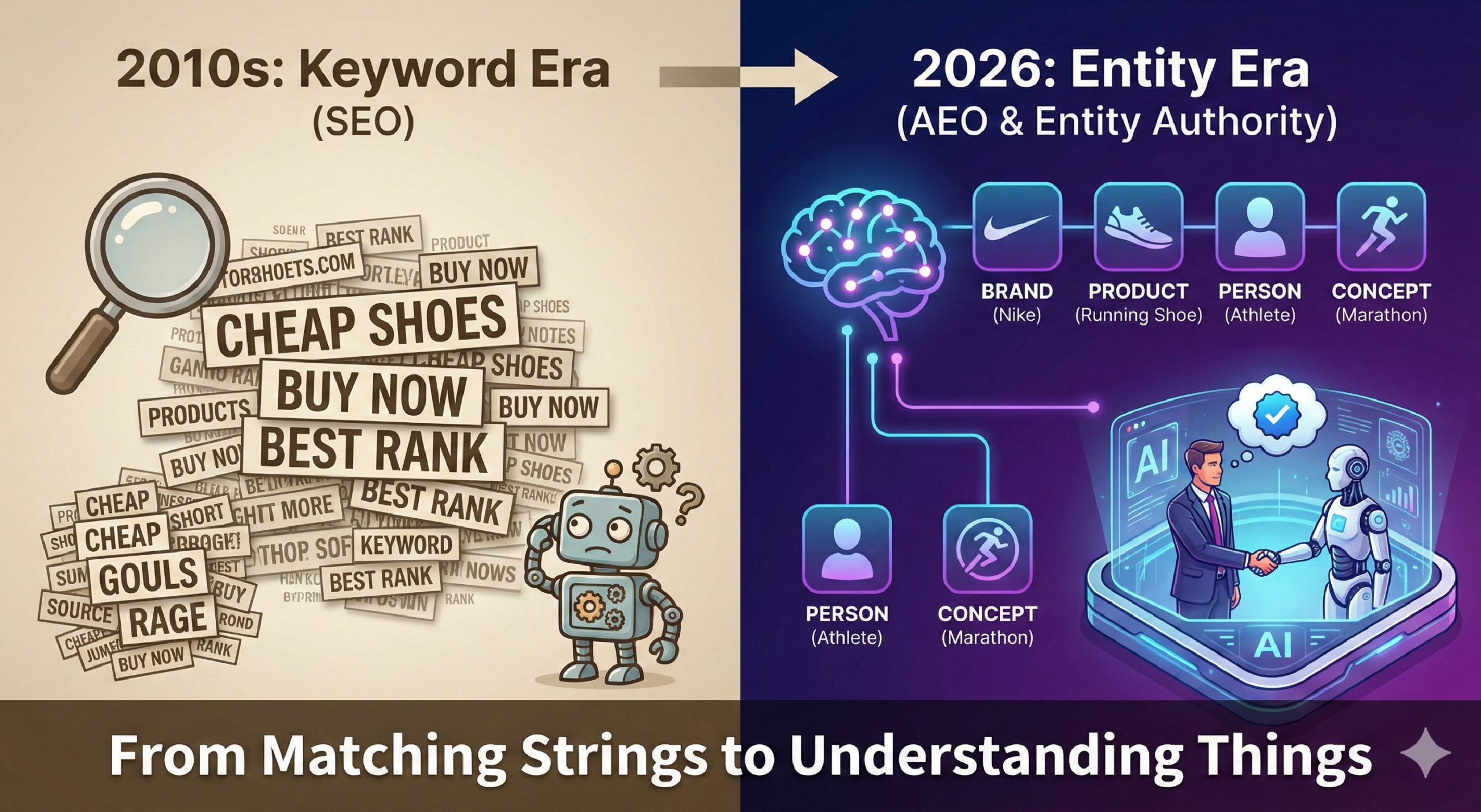
Search is evolving. We have moved from the era of “ten blue links” to the era of direct answers. With the advent of tools such as ChatGPT, Perplexity, Google AI Overviews, and Bing Chat, users are no longer merely searching; they are posing genuine inquiries and anticipating direct answers. This evolution has introduced a new paradigm: Answer Engine Optimization, or AEO, which encourages us to optimize for AI search.
So, what sets AEO apart from traditional SEO? With traditional SEO, the goal is to get your website to rank on the search results page and win a click from the user. But AEO is different. It’s about positioning your content so it becomes the definitive answer that AI pulls, displays, and even cites—letting your words become the trusted authority, front and center, with no extra noise or distractions.
What is Answer Engine Optimization (AEO)?
AEO is all about crafting, structuring, and formatting your content so that AI models and answer engines can quickly understand, trust, and elevate it as the primary source when someone asks a question. It means writing in a way that’s not only clear and factual for human readers, but also optimized for machines to interpret and cite. The focus shifts from just being visible to being the answer that gets quoted.
With classic SEO strategies, visibility is the game: you want to be seen among the results. In the world of AEO, the goal is higher—you want to be the content the AI selects and shares directly with the user. You want the AI to scan your page and immediately recognize, “This is the answer,” then deliver your content as the authoritative response.
How It Works: The Mechanics of AEO
How does AEO actually work in practice? Let’s break it down with a closer look at the process and what it takes to succeed.
First, it’s important to realize that answer engines process information in a fundamentally different way than traditional search engines. They’re not just searching for keywords or ranking pages. They’re acting more like expert researchers, piecing together the most relevant and trustworthy information to answer specific questions.
Here’s the typical workflow:
1. Retrieval-Augmented Generation (RAG)
Most modern answer engines rely on Retrieval-Augmented Generation, or RAG. Here’s how it unfolds: When a user enters a question—something like, “How do I fix a leaky faucet without a plumber?”—the AI scans its own index or the broader web to find the most reliable sources that address the question directly. It then reads through the top sources, pulls out the key facts and instructions, and composes a clear, concise summary tailored to the user’s query.
Finally, it cites the sources it drew from, providing transparency and credit to the original content.

2. Leading With the Answer
AI-powered answer engines prioritize clarity and directness. If your answer is buried deep in lengthy paragraphs or surrounded by fluff, it’s likely to get skipped in favor of content that delivers the answer upfront. This is the core principle of AEO: provide the answer first, then follow up with explanations, details, and supporting information.
Key Strategies for Answer Engine Optimization
How can you position your content to win in this new landscape of AEO? Here are the strategies that work best:
1. Use the Inverted Pyramid Structure
Don’t force readers—or AI models—to dig through your content to find the main point. Deliver the answer right at the top, ideally within the first 40 to 60 words. Once you’ve provided the core answer, use the following sections to add context, examples, nuances, and supporting details. This structure not only benefits AI, but also makes your content more readable and useful for human visitors.
2. Write for Real, Conversational Questions
The way people interact with search engines has changed. Instead of typing in short, keyword-heavy phrases like “Best running shoes 2025,” users now ask questions in the same way they’d speak to a person: “What are the best running shoes for flat feet if I run marathons?” To match this shift, make sure your content targets long-tail, conversational keywords. Use headers that are actual questions—Who, What, Where, When, Why, and How—to align with the way people are phrasing their queries.
3. Structure Your Data for Easy Extraction
AEO thrives on well-structured information. Use schema markup wherever possible—FAQ schema for clear question-and-answer sections, How-To schema for step-by-step guides. Include lists, tables, and other organized data formats. These not only help AI engines quickly understand and extract information, but they also make your content more appealing and accessible to users.
4. Demonstrate Authority and Trustworthiness (E-E-A-T)
AI models are designed to prioritize sources that appear credible and authoritative. To earn this trust, show that you have real expertise and experience: share first-hand insights, back up your statements with hard data or reputable sources, and provide evidence that you’ve actually used the product or solved the problem. If other respected sites link to or reference your content, that’s another strong indicator of authority—the AI pays close attention to these signals.
Final Thoughts
In summary, the world of search is evolving rapidly, and the lines between optimizing for people and machines are blurring. To stand out today, you need to write for both audiences. Lead with direct, clear answers. Organize your content so it’s easy for AI engines to parse and quote. Build trust by demonstrating expertise and citing reliable sources. If you follow these principles, you’ll position yourself as the source that AI wants to quote—and that’s the key to thriving in the next era of search.
You Might Also Like